NEWYou can now listen to Fox News articles!
You see a charge you don't recognize. It looks like it came from a trusted brand. Your instinct kicks in. You want to fix it quickly and move on. That's exactly what happened to Dorothy.
After a simple text, she found herself on the phone with someone who sounded official, confident and completely convincing. Here's how she described it:
"I received a text from APPLE Pay, which I don't even use... It said an Apple Store in CA wants to charge me $144... If I have questions, I should call. DUH! I called and was speaking with the scammer."
"I received a text from APPLE Pay, which I don't even use... It said an Apple Store in CA wants to charge me $144... If I have questions, I should call. DUH! I called and was speaking with the scammer."
— DorothyWithin minutes, the situation escalated.
"He knew everything about me... He said I should take out $15,000... He said he was working with the FBI and the FDIC."
That's when the pressure really started. Dorothy told me this story when she joined me on my Beyond Connected podcast, and what happened next shows just how far these scams can go.
Sign up for my FREE CyberGuy Report
Get my best tech tips, urgent security alerts and exclusive deals delivered straight to your inbox. For simple, real-world ways to spot scams early and stay protected, visit CyberGuy.com – trusted by millions who watch CyberGuy on TV daily. Plus, you’ll get instant access to my Ultimate Scam Survival Guide free when you join.
10 WAYS TO PROTECT SENIORS FROM EMAIL SCAMS
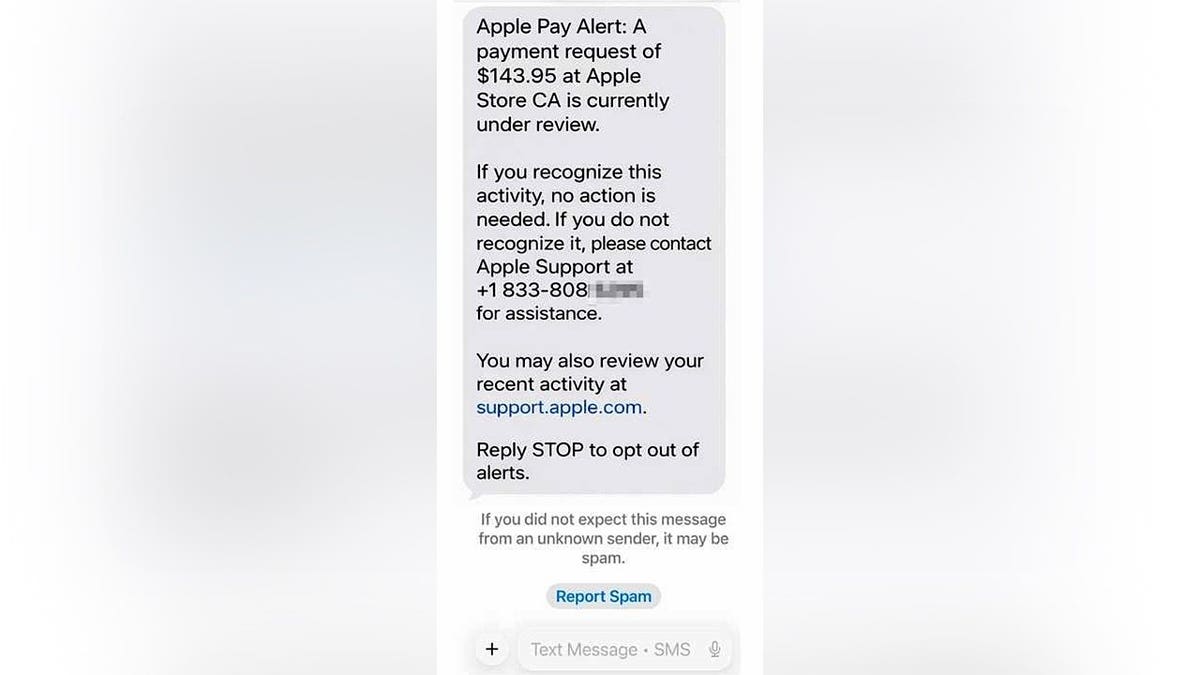
The text sent to Dorothy shows how a fake Apple Pay alert uses urgency and a phone number to pull you into a scam. (Kurt "CyberGuy" Knutsson)
How this Apple Pay text scam actually works
This scam follows a pattern that is becoming more common. It combines a fake alert with a live phone call designed to build trust fast.
Here's what is happening behind the scenes:
Step 1: The fake charge alert
You get a text about a suspicious charge. It looks urgent. It often includes a number to call.
Step 2: You call the scammer
The number connects you directly to a criminal. They pose as Apple, your bank or even law enforcement.
Step 3: They build credibility
They may know your name, address or bank. That information often comes from past data breaches.
Step 4: They create fear and urgency
You are told your money is at risk. You need to act immediately.
Step 5: They control your next move
In Dorothy's case, the scammer told her to withdraw $15,000 and lie to her bank about why.
"He said he would stay on the phone with me while I drove to the bank... If anyone asked, I should say I was buying a car."
That is a major red flag.
PHISHING SCAM EXPLOITS APPLE MAIL 'TRUSTED SENDER' LABEL
Once you call, scammers pose as trusted companies or agencies and pressure you to act quickly. (Kurt "CyberGuy" Knutsson)
The moment everything could have gone wrong
Dorothy drove to the bank with the scammer still on the phone. This is exactly what criminals want. They try to isolate you and keep control of the situation.
But something didn't feel right.
"When I got to the bank, I recognized one of the employees and told her that I was uncomfortable... She said to hang up immediately."
That decision changed everything.
The bank confirmed it was a scam. The calls kept coming from different numbers. Dorothy blocked them all. Fortunately, no money was lost.
Why the Apple Pay text scam feels so real
Scammers are getting better at one thing. They make you feel like you are solving a problem, not being scammed.
Here's why this one works so well:
- It uses a trusted name like Apple Pay
- It creates urgency with a fake charge
- It moves quickly to a live conversation
- It uses real personal details to build trust
- It pressures you to act before you think
They also add authority. Claiming ties to the FBI or FDIC makes people feel like they must comply. In reality, no legitimate agency will ever ask you to move money this way.
The biggest red flags to watch for
If you remember nothing else, remember these:
- A text about a charge that tells you to call a number
- Someone is asking you to withdraw large amounts of cash
- Instructions to lie to your bank or keep a secret
- Claims that your money needs to be "protected"
- Pressure to act immediately
Each one is a warning sign. Together, they confirm it is a scam.

The biggest red flag is being told to move money or keep secrets from your bank or family. (Kurt "CyberGuy" Knutsson)
How to stay safe from Apple Pay text scams
You do not need to outsmart scammers. You just need to slow the situation down.
1) Never trust the number in the message
If you get a suspicious text, do not call the number provided. Look up the official number yourself.
2) Pause before you act
Scammers rely on urgency. Take a moment. Real companies will not rush you like this.
3) Never move money on someone else's instructions
No bank, tech company or government agency will ask you to withdraw cash to "protect" it.
4) Use strong antivirus software
Strong antivirus software can help detect malicious links, block scam websites and warn you before you engage with risky content. Get my picks for the best 2026 antivirus protection winners for your Windows, Mac, Android and iOS devices at Cyberguy.com.
5) Remove your personal data from the web
Scammers often use data from breaches to sound convincing. A data removal service can help reduce your exposure and limit what criminals can find about you online. Check out my top picks for data removal services and get a free scan to find out if your personal information is already out on the web by visiting Cyberguy.com.
6) Talk to someone you trust
A quick conversation with a friend, family member or bank employee can stop a scam cold.
7) Add extra protection
Consider identity monitoring services that alert you if your information is being misused. See my tips and best picks on Best Identity Theft Protection at Cyberguy.com.
What to do if this happens to you
Even if you did not lose money, take a few steps right away:
- Contact your bank using the number on your card
- Place a fraud alert on your credit
- Consider freezing your credit
- Monitor your accounts closely
- Block any follow-up calls or texts
These steps help protect you from future attempts.
What this means for you
This scam did not begin with a complex hack. Instead, it started with a simple text. That is what makes it so dangerous. At first, it looks routine. Then urgency takes over. As a result, anyone can feel pressured to act quickly and without thinking.
In many cases, the situation feels real. That is how people get pulled into a conversation that seems legitimate. In Dorothy's case, she trusted her instincts at the right moment. Because of that decision, fortunately, she did not lose $15,000.
CLICK HERE TO DOWNLOAD THE FOX NEWS APP
Kurt's key takeaways
Scammers target more than technology. They focus on human behavior. They create pressure, build trust and keep you engaged long enough to make a mistake. However, you can break the cycle. A single pause can disrupt the scam. Asking one question can expose it. Even a quick conversation with someone you trust can stop it. If you'd like to hear more of Dorothy's story, you can catch our full conversation on my Beyond Connected podcast at getbeyondconnected.com/
If you got a text like this right now, would you pause or would you call? Let us know by writing to us at Cyberguy.com.
Sign up for my FREE CyberGuy Report
Get my best tech tips, urgent security alerts and exclusive deals delivered straight to your inbox. For simple, real-world ways to spot scams early and stay protected, visit CyberGuy.com – trusted by millions who watch CyberGuy on TV daily. Plus, you’ll get instant access to my Ultimate Scam Survival Guide free when you join.
Copyright 2026 CyberGuy.com. All rights reserved.
Kurt "CyberGuy" Knutsson is an award-winning tech journalist who has a deep love of technology, gear and gadgets that make life better with his contributions for Fox News & FOX Business beginning mornings on "FOX & Friends." Got a tech question? Get Kurt’s free CyberGuy Newsletter, share your voice, a story idea or comment at CyberGuy.com.