NEWYou can now listen to Fox News articles!
Treasury Secretary Scott Bessent pushed back on a CNBC reporter's characterization of global oil shortages Monday during an appearance on CNBC's "Squawk Box," arguing that some media coverage is misrepresenting the size of the supply gap created by disruptions in the Persian Gulf.
Speaking with CNBC anchor Brian Sullivan, Bessent disputed the suggestion that the release of Russian oil shipments represented only a minimal contribution to global supply.
"No, no, but that’s bad framing," Bessent said after Sullivan described the oil as equivalent to roughly one and a half days of global supply. "Good framing is that there was about 20 million a day coming out of the Gulf."
The exchange came as global energy markets react to escalating tensions involving Iran and disruptions near the Strait of Hormuz, one of the world's most critical shipping routes for oil and natural gas.
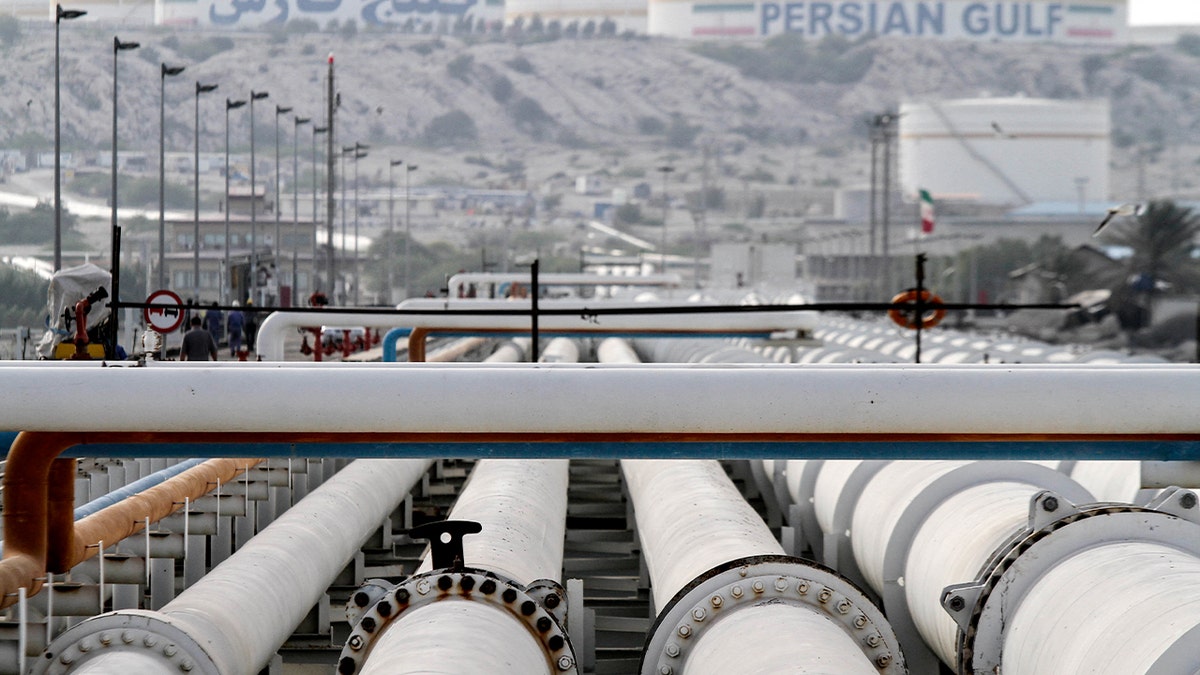
Export oil pipelines are seen at an oil facility on Kharg Island, on the shore of the Gulf, Feb. 23, 2016. (Str/AFP Via Getty Images)
TRUMP SAYS US ‘OBLITERATED’ TARGETS IN STRIKE ON KEY IRANIAN OIL HUB
"That's a lot of oil," Bessent said.
He argued that broader market dynamics show more available supply than some commentators suggest. Bessent noted that approximately 1.5 million barrels per day of Gulf exports come from Iranian oil, while other producers such as Saudi Arabia and the United Arab Emirates redirected shipments through alternative routes.
"So we are in a deficit somewhere between 10 and 14," Bessent said, referring to his estimate of the current global supply shortfall.
US 'LOCKED AND LOADED' TO DESTROY IRAN'S 'CROWN JEWEL' 'IF WE WANT,' TRUMP WARNS
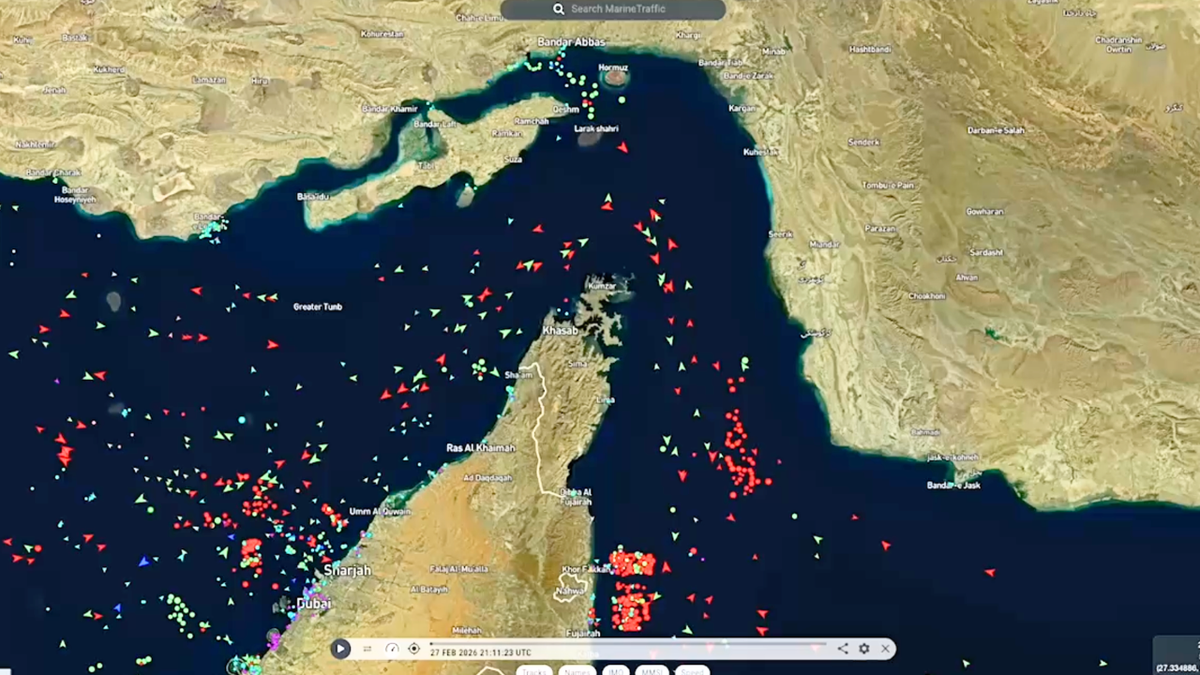
A screenshot of a marine traffic terminal showing vessels in the Strait of Hormuz on March 4, 2026. (Kpler/Marine Traffic)
Despite the deficit, Bessent said additional supply buffers exist, including Iranian oil currently stored in tankers and reserves held by major producers.
"If you think about the Russian oil, that is somewhere between nine to 11 days, 12 days of supply without the market moving," he noted.
Bessent also addressed reports about a possible delay in a planned meeting between President Donald Trump and Chinese President Xi Jinping, saying any change would be related to logistics rather than disputes over security in the Strait of Hormuz.
TRUMP WARNS NATO OF 'VERY BAD' FUTURE IF ALLIES DON'T HELP SECURE STRAIT OF HORMUZ
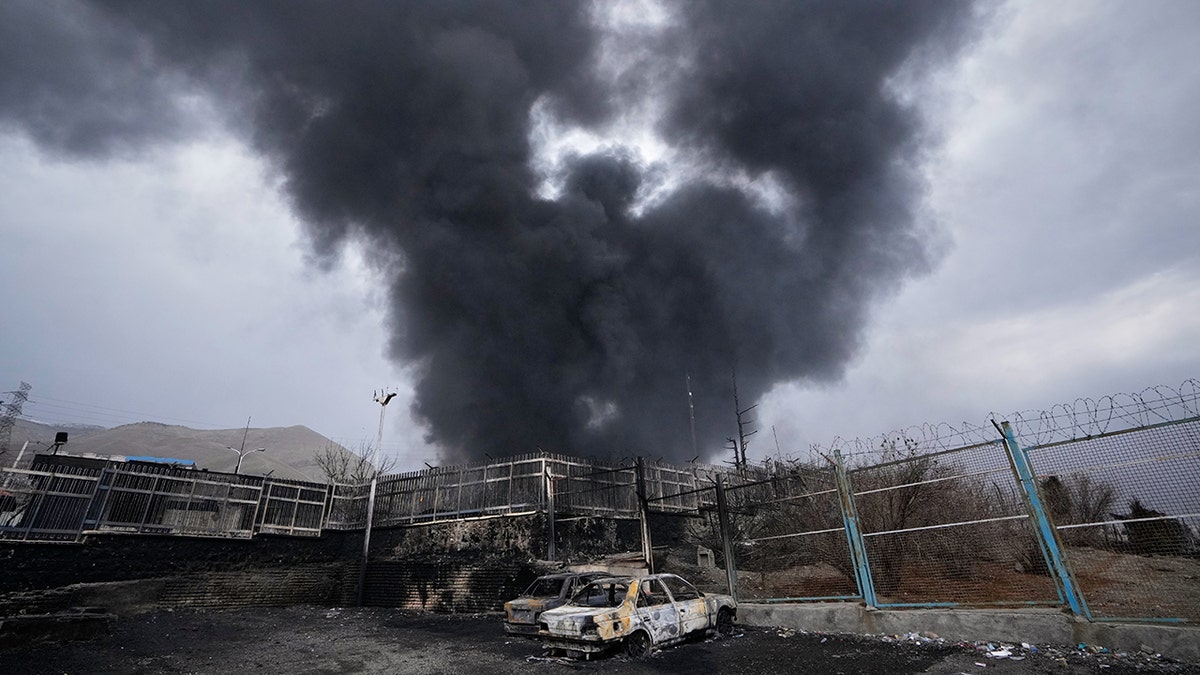
A thick plume of smoke rises from an oil storage facility hit by a U.S.-Israeli strike late Saturday in Tehran, Iran, and into Sunday, March 8, 2026. (Vahid Salemi/AP Photo)
"If the meeting for some reason is rescheduled, it would be because of logistics," Bessent said. "The president wants to remain in D.C. to coordinate the war effort."
The treasury secretary said talks with the Chinese trade delegation were constructive and predicated global oil prices could eventually fall once the conflict subsidies and markets stabilize.
CLICK HERE FOR MORE COVERAGE OF MEDIA AND CULTURE
"I think probably much lower," Bessent said when asked whether crude could return to around $80 per barrel in the coming months.
CLICK HERE TO DOWNLOAD THE FOX NEWS APP
CJ Womack is an associate editor at Fox News.
CJ joined Fox News Digital's team in 2026, which highlights the vital role journalism plays in shaping politics and culture. He has years of experience analyzing and reporting on the news media.
CJ graduated from Long Beach State University in 2025 with a Bachelor of Arts in Political Science and a minor in Journalism.
Story tips can be sent to [email protected], and you can follow on Twitter.