NEWYou can now listen to Fox News articles!
A new wave of organized crime maneuvers is taking aim at Americans’ holiday shopping purchases – and their wallets.
Hackers leveraging malware systems and other cybercriminal tools are infiltrating online freight marketplaces to make off with high-value cargo while items are in transit.
"I think the criminals have identified that the weak point between point A and point B is in transportation, right?" Michael Evanoff, chief security officer and strategic advisor for AI-security company Verkada, told Fox News Digital. "So instead of putting yourself in harm's way by going to a depot or a distribution center, why not capture it in transit?"
Since 2020, both freight companies and law enforcement have seen an alarming uptick in criminal groups utilizing remote, online methods to hijack cargo deliveries and make off with valuable loot.
AMERICAN TRUCKING INDUSTRY URGES LAWMAKERS TO ACT AS ONLINE CARGO THEFT SURGES
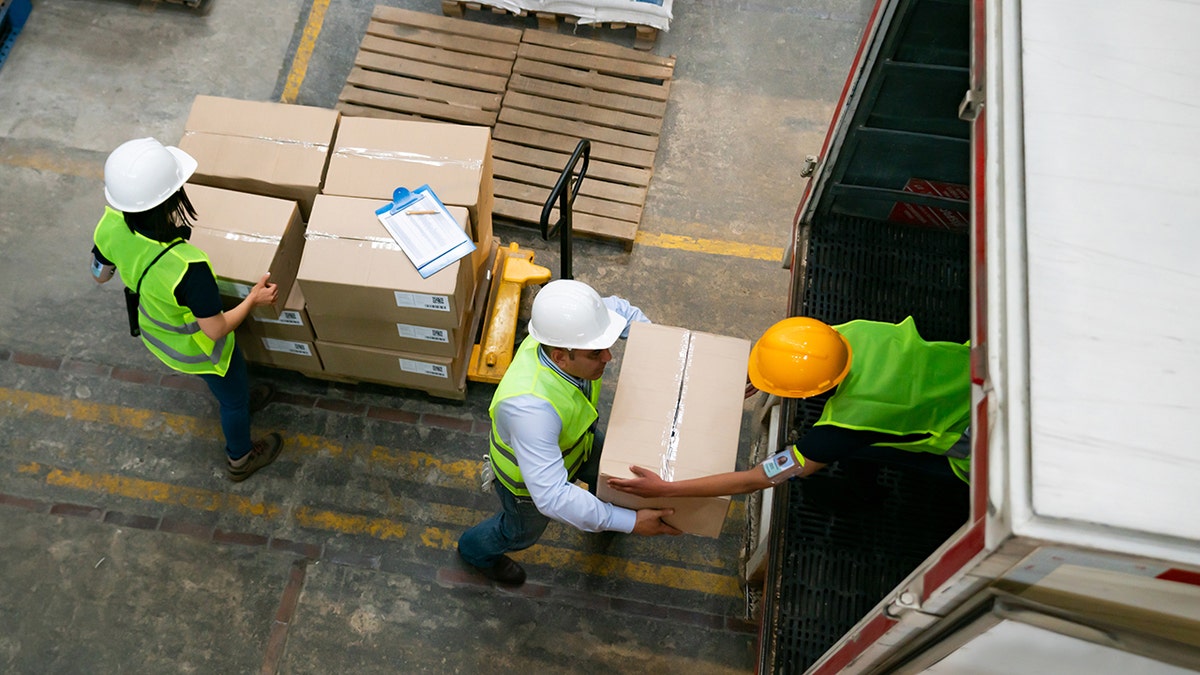
Organized crime groups throughout the world are using online tools to hijack cargo trucks while they are transporting goods. (iStock)
"When [the COVID-19 pandemic] hit, we saw a big spike," Keith Lewis, vice president of operations at Verisk CargoNet, told Fox News Digital. "Then the year after that, [cases] dropped back down again, and we thought we were somewhat normalizing."
"Then, with the tools and the techniques that the bad guys learned from COVID, it's almost like they took a year off, went to school, came back and reinvented themselves. They [started] using the internet to commit acts of fraud, versus just straight up traditional thefts of stealing the truck at the truck stop or the rest area – and that's when the fraud started taking off."
The current year has seen a rise in cargo thefts nationwide, with over $318 million in losses stemming from stolen goods being recorded, according to data released by Verisk CargoNet. Additionally, data indicates the average value of the stolen shipments has risen to $278,797.

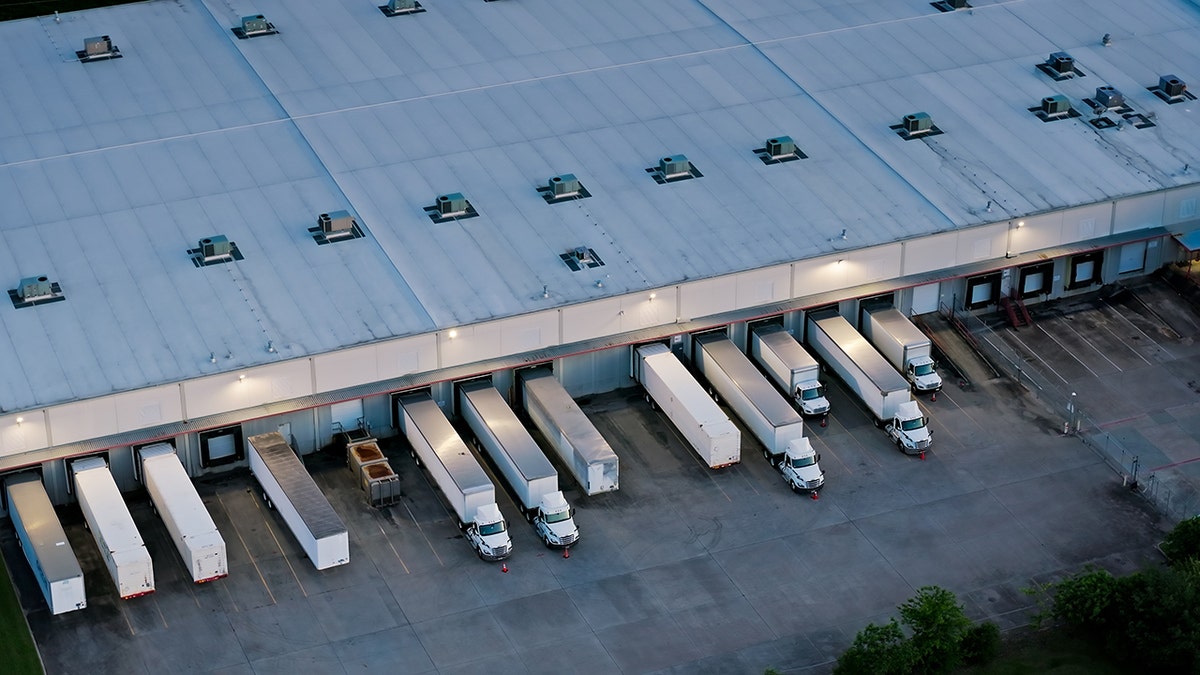
More than $318 million in losses stemming from stolen goods has been recorded by companies throughout the United States since the start of 2025, according to data released by Verisk CargoNet. (iStock)
The process for stealing goods is simplified for thieves, thanks to modern internet tools and artificial intelligence. Cybercriminals will often turn to online load boards – an online marketplace in which companies and truck drivers can share details regarding upcoming shipments – to determine which vehicles they want to target.
"You can find a load, or a driver and company can find a load to move their equipment," Lewis said. "That's where the big problem comes in. We don't know who we're talking to on the other end of the – I wouldn't even say phone line – but the other end of the computer network."
From there, criminals will create an online account and impersonate a truck driver or company to gain more information about a shipment. Additionally, companies are now using artificial intelligence to screen cargo and drivers, ultimately making it even easier for hackers to fool the software into thinking they are a legitimate individual in the supply chain.
ORGANIZED CRIME RINGS DRIVE STREET TAKEOVERS BY USING KIDS TO STEAL CARS FOR WILD STUNTS: EXPERT
Criminal groups will use online load boards to pinpoint the routes of vehicles carrying cargo that they hope to steal, ultimately intercepting the drivers with fake documentation and taking the goods overseas. (iStock)
"The vetting process has just almost gone out the window," Lewis told Fox News Digital. "So you think about, well, who's vetting this truck, who's making sure it's the right truck or with the right driver? No one is."
Once criminals have identified the contents and location of a specific cargo truck, they will then intercept the unmarked vehicle with fake identification to fool the driver into handing over their items.
"This cannot work without the human and cyber aspect," Evanoff told Fox News Digital. "You're basically meeting a truck with no designation on it. So [criminals] will cyber-in, and then back it up with somebody being there in the truck to take the load at the designated place that was intended online."
CRIMINAL NETWORKS EXPLOIT US INTERSTATES TO MAKE HUMAN TRAFFICKING VICTIMS VANISH: ‘REAL PLAGUE’

Since 2020, both freight companies and law enforcement have seen an alarming uptick in criminal groups utilizing remote, online methods to hijack cargo deliveries. (iStock)
The holiday season also serves as a prime opportunity for thieves to target larger-than-usual cargo shipments.
In the 2024 Thanksgiving period, there were 79 recorded instances of cargo theft within the United States, marking a 65% increase from the prior year and accounting for roughly $9.5 million in losses, according to data released by Verisk CargoNet.
Consumable goods are the top commodity targeted by thieves, followed by household goods and electronic appliances, data shows.
BLACK FRIDAY THEFT THREAT TURNS HOLIDAY WEEKEND INTO SHOPLIFTERS' 'SUPER BOWL': FORMER DETECTIVE
Additionally, data from Verisk CargoNet reveals that the New York City metropolitan area has become a hotbed for criminal groups looking to misdirect shipments while in transit, with states like California, Florida and Texas also serving as a catalyst for cargo thefts.
Earlier this year, the Department of Transportation (DOT) sent out a notice asking stakeholders to share commentary regarding how the federal government can better develop strategies to cut down on cargo thefts, signaling the issue is garnering the attention of high-level law enforcement officials.
The DOT added that all types of cargo thefts "create significant economic losses, disrupt supply chains, and in some cases fund broader illicit activities such as narcotics trafficking, counterfeiting, and human smuggling."
The national security aspect of cybercriminals targeting cargo shipments is echoed by Lewis, who explained that crime rings will often send the stolen items out of the country – or sell the goods to Americans who believe they are making a legitimate purchase.
"We have tracked these groups to 40-plus countries," Lewis told Fox News Digital.
Lewis added that once the items are taken abroad or sold to consumers, they become virtually untraceable by law enforcement.
"The bad guys have set up a supply chain that's somewhat legitimate overseas," Lewis said. "When they get across the [ocean] with these goods, they're not stolen anymore. There's no tracking. They can move them freely around their country and around the world with no hesitation."
CLICK HERE TO DOWNLOAD THE FOX NEWS APP
For now, research companies are primarily focused on identifying the criminal groups’ habits by conducting surveillance of their networks, meaning few arrests are being made. However, experts warn that while good-willed individuals have access to technology to track down thieves, criminals also have access.
"The supply chain moves at the speed of light," Lewis said. "But the bad-guy supply chain moves just as fast."
Julia Bonavita is a U.S. Writer for Fox News Digital and a Fox Flight Team drone pilot. You can follow her at @juliabonavita13 on all platforms and send story tips to [email protected].