NEWYou can now listen to Fox News articles!
Georgia secured a major victory Tuesday in its long-running redistricting battle after a federal appeals court overturned a lower court ruling that the state’s 2021 maps violated the Voting Rights Act, sending the case back for a complete re-evaluation.
The 11th U.S. Circuit Court of Appeals said the lower court must determine whether there was a "strong inference" that the maps were intentionally drawn to dilute Black voting power, rather than simply finding that the maps had a discriminatory effect under permissible partisan gerrymandering.
The decision follows a major Supreme Court ruling in a similar Louisiana case that significantly modified the legal framework for determining racial discrimination in redistricting. The high court said plaintiffs must provide evidence of "present-day intentional racial discrimination."
"Plaintiffs must be able to show that voters are engaged in racial-bloc voting because of race, not partisan affiliation," the ruling stated.
BLOCKBUSTER SUPREME COURT VOTING RIGHTS RULING IGNITES REDISTRICTING WAR ACROSS SOUTHERN STATES

Georgia Gov. Brian Kemp speaks onstage in Atlanta on May 14, 2026. The state’s 2021 redistricting maps were challenged as racial gerrymanders. (Derek White/Getty Images)
In 2023, a federal judge ruled that Georgia’s congressional and state legislative maps drawn after the 2020 census violated Section 2 of the Voting Rights Act and issued a permanent injunction barring Georgia from using the maps in future elections.
The lower court specifically ordered the state to create additional majority-Black districts across the state Senate, state House of Representatives and U.S. congressional districts.
Meanwhile, a similar redistricting battle was unfolding in Louisiana, where Robinson v. Ardoin challenged the state’s congressional map, which initially included just one majority-Black district out of six.
FEDERAL JUDGE BLOCKS ALABAMA REDISTRICTING PLAN IN BLOW TO TRUMP

Housing in front of the skyline of Atlanta, Georgia, on Nov. 13, 2022. The state's congressional and legislative maps will get a fresh review under the Supreme Court’s new redistricting standard. (Elijah Nouvelage/Bloomberg via Getty Images)
A federal court later ruled in favor of the plaintiffs, ordering Louisiana to create a second majority-Black district after finding that the original map violated the Voting Rights Act.
However, a group of non-minority voters later challenged the new map, arguing that the newly created district amounted to racial gerrymandering and violated the 14th and 15th Amendments.
In the second lawsuit, Louisiana v. Callais, the Supreme Court ultimately upheld the constitutionality of Section 2 of the Voting Rights Act while clarifying how courts should evaluate claims of racial discrimination in redistricting. The ruling emphasized the need for evidence supporting a "strong inference" of intentional discrimination, rather than relying solely on the effects of a map.
WHY THE SUPREME COURT GUTTED THE VOTING RIGHTS ACT AFTER SIX DECADES IN A BLOW TO BLACK POLITICIANS
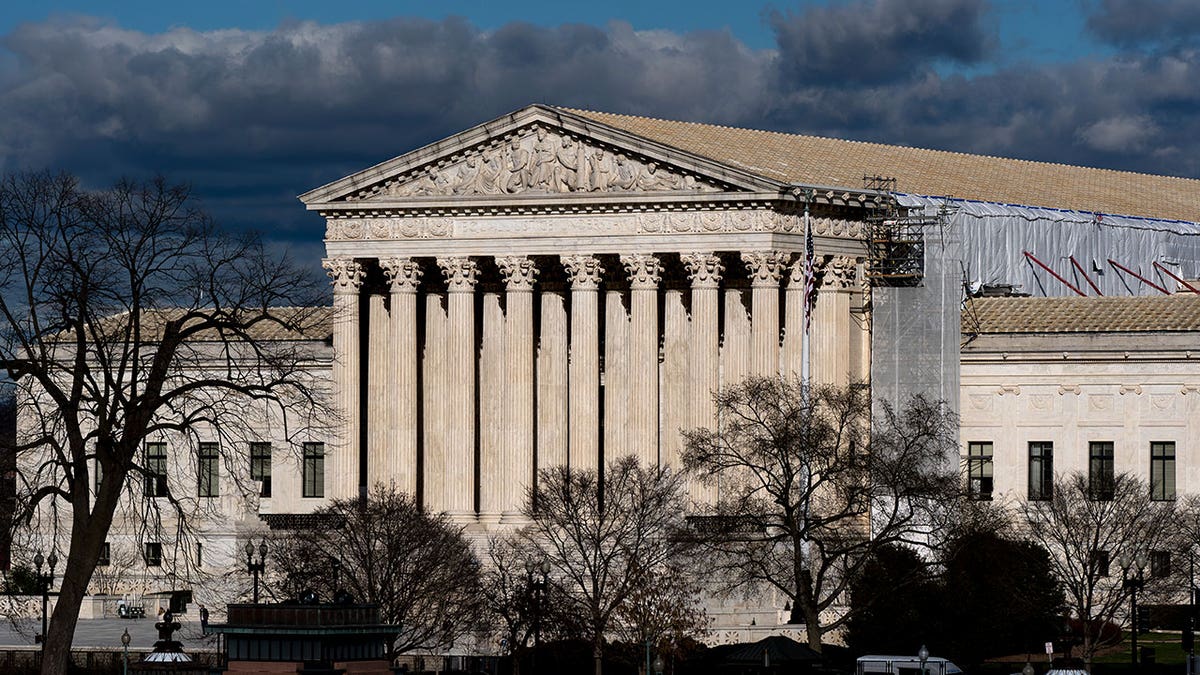
The U.S. Supreme Court is seen in Washington, D.C., on March 7, 2024. The 11th Circuit cited a major Supreme Court redistricting ruling in Georgia’s map battle. (AP Photo/J. Scott Applewhite, File)
The decision also altered the legal framework federal courts have used for decades to evaluate racial vote-dilution claims. Established in the Supreme Court’s 1986 ruling in Thornburg v. Gingles, the Gingles framework generally did not require plaintiffs to prove that lawmakers acted with racial intent and instead focused on whether a voting system had discriminatory effects.
CLICK HERE TO DOWNLOAD THE FOX NEWS APP
The Georgia case will now return to the district court for reconsideration under the Supreme Court’s framework established in Louisiana v. Callais.
Bonny Chu is a Breaking and Trending News Writer for Fox News Digital