NEWYou can now listen to Fox News articles!
NASA’s Artemis II crew fired the Orion spacecraft’s main engine, committing the mission to a trajectory toward the moon just one day after launching into deep space.
The translunar injection burn, which lasted several minutes, is the most critical engine firing of the mission and propelled the spacecraft out of Earth’s orbit and onto a path that will carry the crew around the moon and back to Earth.
"With that successful TLI, the crew's feeling pretty good up here on our way to the moon, and we just wanted to communicate to everyone around the planet who's worked to make Artemis possible that we firmly felt the power of your perseverance during every second of that burn," Canadian Space Agency astronaut Jeremy Hanson told mission control. "Humanity has once again shown what we are capable of, and it's your hopes for the future that carry us now on this journey around the moon."
NASA said the burn places Orion on a "free-return trajectory," a flight path that loops around the moon and naturally brings the spacecraft back toward Earth without requiring additional major propulsion.
NASA RACES TO BUILD MOON BASE AS US CHALLENGES CHINA IN NEW SPACE RACE
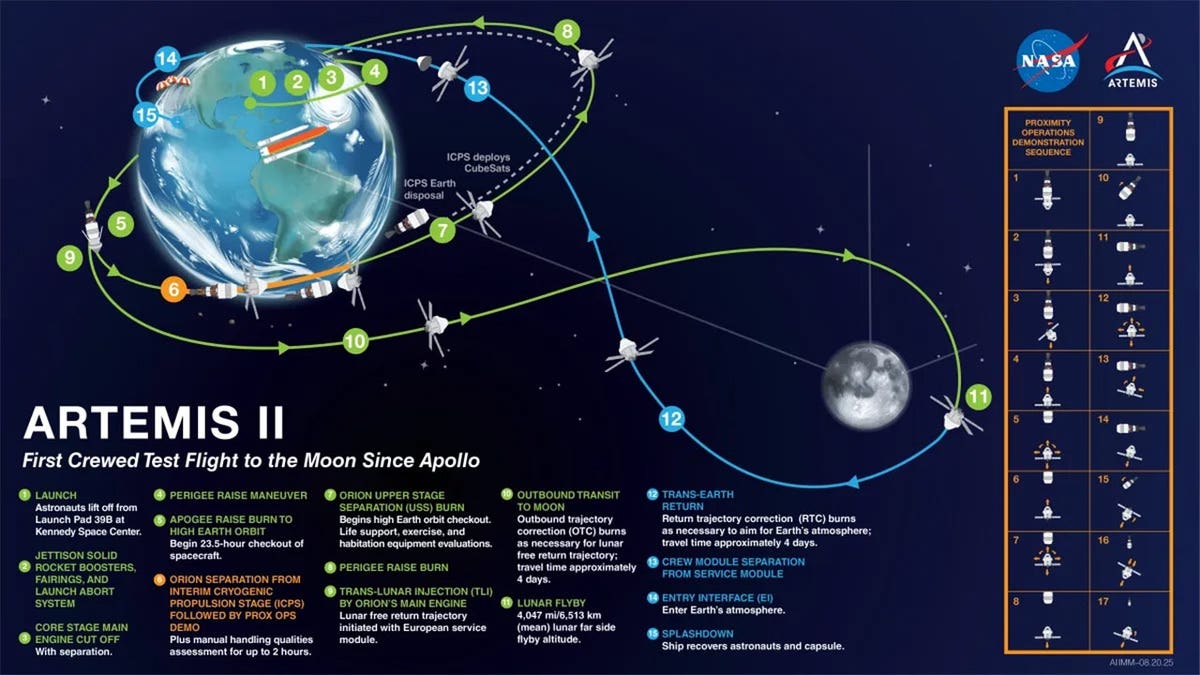
The Artemis II crew was launched toward the moon on Thursday after a nearly 5 minute burn set the Orion spacecraft on a trajectory out of Earth's orbit for the nearly 8-day flight to the lunar object and back. (NASA)
The milestone marks the moment the Artemis II mission transitions from Earth orbit operations to deep space travel, sending astronauts farther from Earth than any crewed mission in more than 50 years.
Hanson and astronauts Reid Wiseman, Victor Glover and Christina Koch of the U.S. launched Wednesday evening aboard the Space Launch System rocket from Kennedy Space Center in Florida.
The four-person crew lifted off at 6:35 p.m. on Wednesday, marking the first crewed mission beyond low Earth orbit since 1972 and a major step in NASA’s efforts to return humans to the moon.
CHILD GOES VIRAL FOR EXCITED, BLUNT RESPONSE TO REPORTER'S QUESTION ABOUT ARTEMIS II MOON MISSION
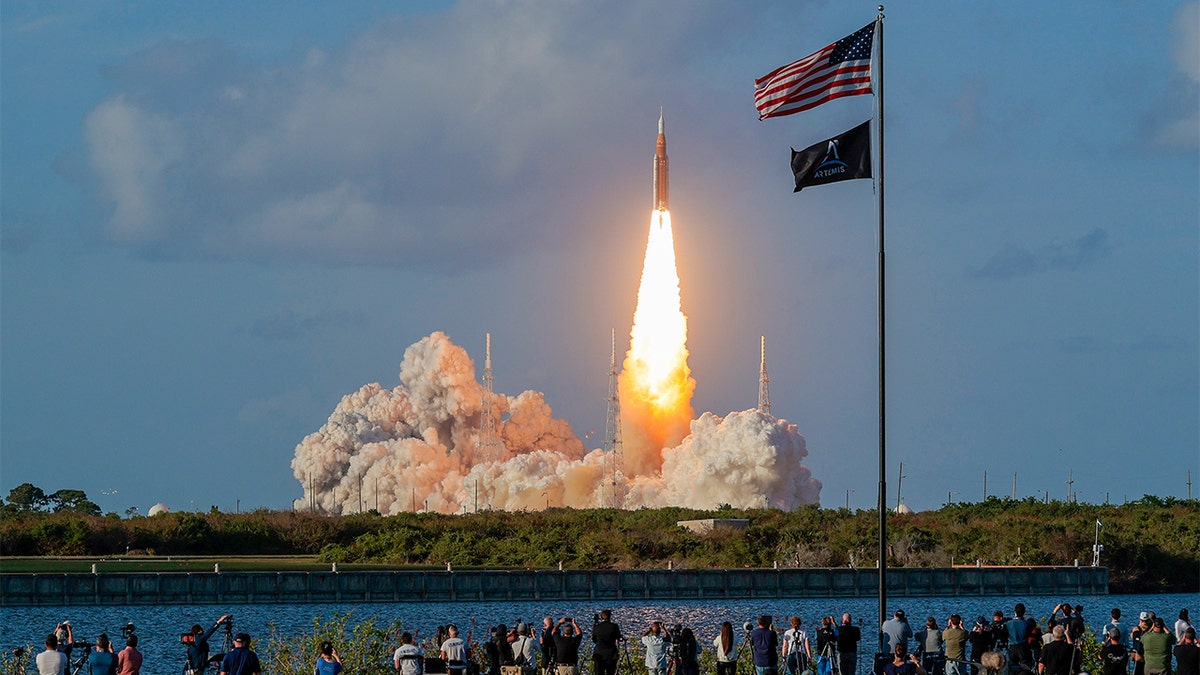
NASA's Artemis II Space Launch System rocket carrying the Orion spacecraft lifts off from Launch Complex 39B at Kennedy Space Center on April 1, 2026 in Cape Canaveral, Florida. (Chip Somodevilla/Getty Images)
Prior to the translunar injection, the crew completed a perigee raise burn to position the spacecraft in the correct orbital geometry for the maneuver, ensuring the engine firing would place Orion precisely on its intended path.
With the burn now complete, Orion will spend the next several days traveling toward the moon, with NASA planning a series of smaller trajectory correction maneuvers to keep the spacecraft on course.
As the spacecraft approaches the moon, it will enter the lunar sphere of influence, the point at which the moon’s gravity becomes stronger than Earth’s pull, allowing Orion to swing around the far side before beginning its return journey.
CHAD WOLF: SPACE ISN’T JUST THE FINAL FRONTIER, IT’S THE ‘ULTIMATE HIGH GROUND’
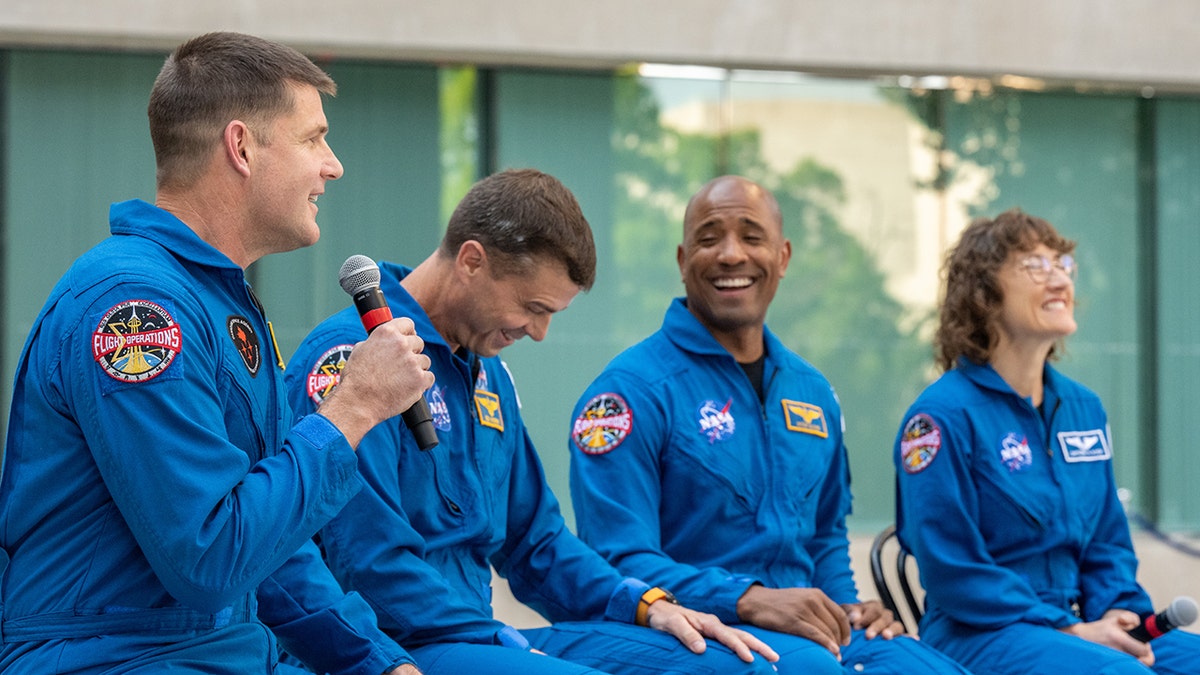
From left to right, CSA (Canadian Space Agency) astronaut Jeremy Hansen, NASA astronauts Reid Wiseman, Victor Glover, and Christina Hammock Koch participate in a media gather, Wednesday, May 17, 2023, outside of the Canadian Embassy in Washington. Wiseman, Glover, Koch, and Hansen, who will fly around the Moon on NASA’s Artemis II flight test, visited Washington to discuss their upcoming mission with members of Congress and others. (Keegan Barber/NASA)
Although Artemis II will not land on the lunar surface, the mission is designed to test critical systems needed for future moon landings and deep space exploration.
NASA has described Orion as the most powerful spacecraft it has built for human spaceflight, capable of carrying astronauts farther into space than at any point since the Apollo era.
The mission follows the uncrewed Artemis I test flight and is intended to pave the way for future missions, including plans to return astronauts to the lunar surface in the coming years.
CLICK HERE TO DOWNLOAD THE FOX NEWS APP
NASA has said the broader Artemis program aims to establish a long-term human presence on the moon and lay the groundwork for eventual missions to Mars.
The Artemis II crew is expected to travel around the moon over several days before returning to Earth for a planned splashdown in the Pacific Ocean.
Greg Wehner is a breaking news reporter for Fox News Digital.
Story tips and ideas can be sent to [email protected] and on Twitter @GregWehner.