NEWYou can now listen to Fox News articles!
Archaeologists recently unveiled rare written evidence of Christianity's rise over a Roman mystery religion. They found an ancient inscription, written in the same language that was spoken by Jesus Christ.
The engraving was found at an underground Mithras temple at Zerzevan Castle, a Turkish fortification roughly 40 miles north of the Syrian border.
The inscription back 1,700 years and was written in Aramaic, which was widely spoken across the ancient Near East, including by Jesus Christ.
ARCHAEOLOGISTS UNEARTH ANCIENT TREASURE CACHE AT BIBLICAL CITY CONNECTED TO GENESIS
The temple was dedicated to Mithras, a deity worshiped by followers of a "mystery cult" associated with light and cosmic order.
During the second and third centuries A.D., Mithraism was widespread throughout the Roman Empire — and the Zerzevan underground sanctuary is regarded as one of its best-preserved temples.

A newly deciphered 1,700-year-old Aramaic inscription at a Roman Mithras temple in Turkey documents its closure by early Christians, archaeologists say. (Heritage Art/Heritage Images via Getty Images; Aziz Aslan/Anadolu via Getty Images)
The inscription is located at the entrance of the temple, along with a depiction of a cross. Its meaning had eluded researchers since it was discovered in 2017.
The engraving is the first known Aramaic inscription documenting the closure of a Mithras temple, Mardin Artuklu University professor Mehmet Sait Toprak told Turkish state news outlet Anadolu Agency (AA), which first reported the discovery.
TEST YOURSELF WITH OUR LATEST LIFESTYLE QUIZ
Toprak analyzed the inscription's language and letter forms to determine its meaning.
Comparing it with Old Syriac and Aramaic inscriptions from the second and third centuries A.D., he concluded the inscription dates to the third or fourth century A.D.

The ancient inscription was discovered at Zerzevan Castle, where one of the Roman world's best-preserved Mithras temples still survives. (Aziz Aslan/Anadolu via Getty Images)
The inscription mentions both Mithras and Jesus Christ — symbolizing the shift from one faith to the other, according to Toprak.
The professor told AA the engraving also contains references to the Holy Cross.
CLICK HERE TO SIGN UP FOR OUR LIFESTYLE NEWSLETTER
"This is an extremely important archaeological discovery," Toprak told the outlet.
Excavation director Aytaç Coşkun told AA that earlier coin discoveries had suggested the temple was abandoned in the third or fourth century, but the newly deciphered inscription provides new direct evidence that it was closed and symbolically sealed by Christians.

The inscription's language and letter forms helped researchers date the engraving to the third or fourth century A.D. (Aziz Aslan/Anadolu via Getty Images)
He added that, once fourth-century Roman emperors embraced Christianity, Mithraism was seen as a rival religion.
CLICK HERE FOR MORE LIFESTYLE STORIES
The latest discovery is one of many early Christian finds resurfacing in Asia Minor.

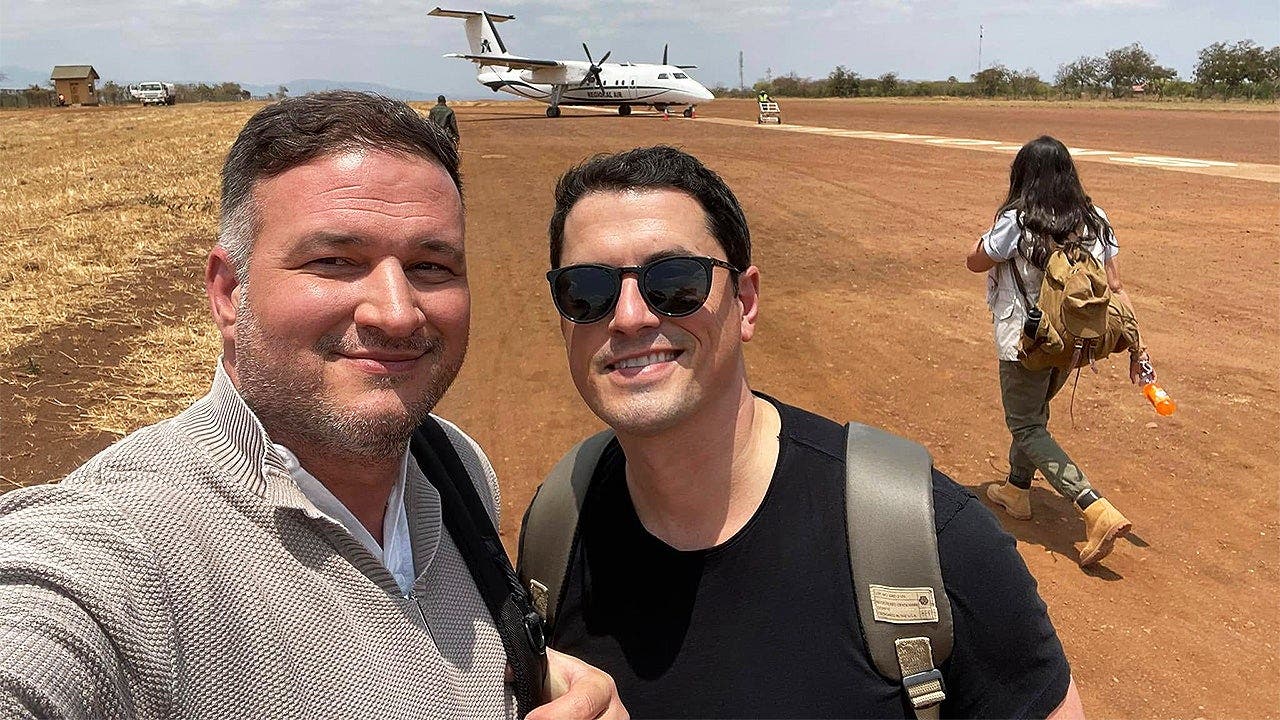
"This is an extremely important archaeological discovery," said professor Mehmet Sait Toprak, pictured above. (Aziz Aslan/Anadolu via Getty Images)
Last summer, archaeologists excavating the ancient city of Olympus uncovered the remains of a fifth-century Christian church, bearing an inscription hidden for more than 1,000 years.
CLICK HERE TO DOWNLOAD THE FOX NEWS APP
The same year, archaeologists excavating Kaunos found the remains of a Roman hospital that was later transformed into a Christian sanctuary.