NEWYou can now listen to Fox News articles!
How you eat can influence how you sleep, according to experts.
Erin Palinski-Wade, a New Jersey-based registered dietitian, certified diabetes care specialist and author of "The Sleepdemic Solution," says certain foods can make, or break, a good night’s sleep.
"There are a number of foods that can help support sleep, and sometimes it's even a combination," she told Fox News Digital.
5-STEP SLEEP RESET COULD PROMOTE HEALTHY WEIGHT LOSS, NUTRITIONIST SAYS
Supporting better sleep
Keeping blood sugar steady throughout the day may help prevent afternoon energy crashes and support more restorative sleep at night, Palinski-Wade said.
Waking up in the middle of the night and struggling to fall back asleep may not always be insomnia, she suggested, but could be linked to fluctuations in glucose levels.
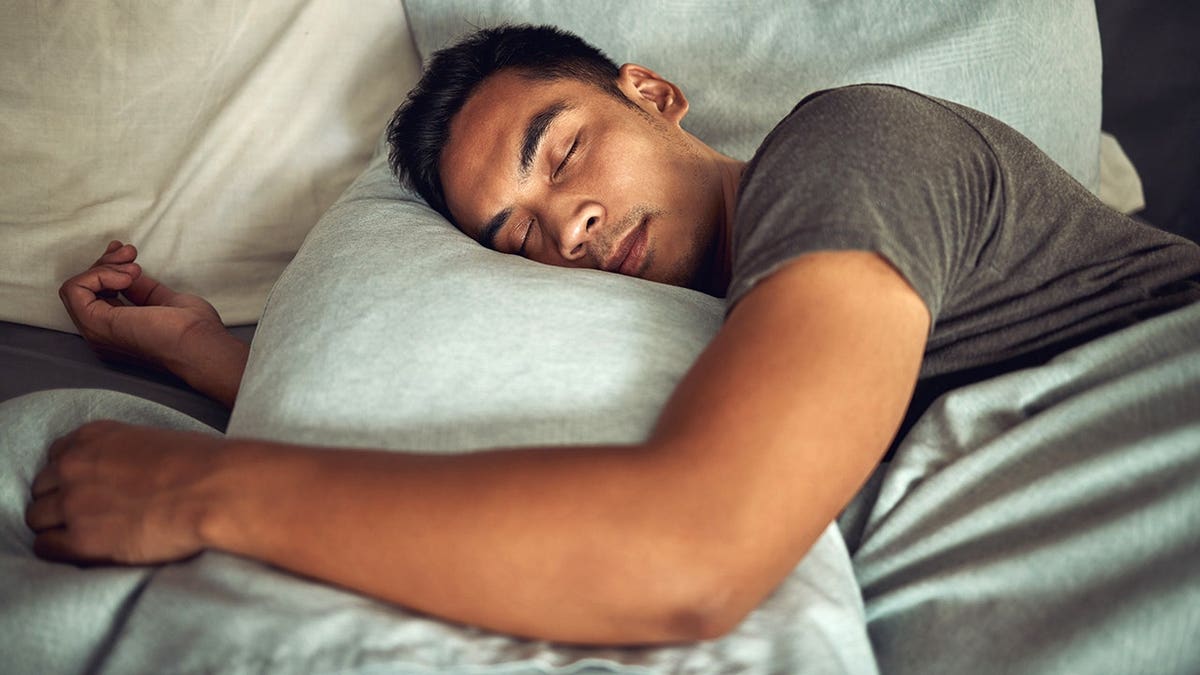
Keeping blood sugar steady throughout the day may help prevent afternoon energy crashes and support more restorative sleep at night. (iStock)
Combining lean proteins, slow-digesting carbohydrates and healthy fats in meals and snacks can help stabilize those levels — what Palinski-Wade called the "No. 1 way" to improve overall sleep.
Some small studies suggest tart cherry juice may support sleep, and the expert named tart cherries — or 100% tart cherry juice — as her top choice.
FOOD CRAVINGS AT 3:45 PM AREN'T RANDOM, HERE'S WHAT YOUR BODY MAY BE WARNING YOU ABOUT
"Tart cherries [are] one of the foods that have the highest amount of melatonin naturally, but they also have compounds that help to really extend that melatonin in our bodies and our body's ability to use it," she said.
Still, research linking tart cherry consumption to modest improvements in sleep duration or quality is limited and mixed; a 2025 systematic review reached a similar conclusion.

The expert recommends ingesting 4 to 6 ounces of 100% tart cherry juice or about a quarter cup of dried tart cherries for better sleep. (iStock)
For those who suffer from insomnia, Palinski-Wade recommends ingesting 4 to 6 ounces of 100% tart cherry juice, or about a quarter cup of dried tart cherries.
"It's a really, really great tool to improve your sleep – and it's really tasty, too," she said.
TEST YOURSELF WITH OUR LATEST LIFESTYLE QUIZ
Foods and drinks that may help reduce inflammation can also support sleep, the dietitian said.
"When we have more antioxidants in the body, more anti-inflammatory compounds, we're really helping our body to achieve that more restful state," Palinski-Wade said.
Foods rich in antioxidants and anti-inflammatory compounds — including nuts and seeds, olive oil and avocados — also provide healthy fats and other nutrients that may support sleep.

Any more than 300 milligrams of caffeine per day becomes a "stressor to our body," the expert warned. (iStock)
Caffeine’s sleep impact
On the other hand, Palinski-Wade warned that caffeine intake can negatively impact sleep quality.
"So many of us have a poor night's sleep and the next day we reach for caffeine to give us a burst of energy," she said. "And there's nothing wrong with a little bit of caffeine, but you have to look at how much you're having and how close to bedtime."
CLICK HERE TO SIGN UP FOR OUR HEALTH NEWSLETTER
"And it's a stimulant, so it's harder to fall asleep," Palinski-Wade warned. "If you have foods or beverages with a large amount of caffeine, and you're having them in the afternoon or toward the evening, that is going to make it very hard to get restorative, restful sleep in the evening."
For those who do drink caffeine, it is best to stop about 10 hours before bedtime, the expert advised.

Stimulation and inflammation from caffeine can disrupt sleep if consumed too close to bedtime. (iStock)
The "sweet spot" for daily caffeine intake is 300 milligrams or less, she said. Any more than that becomes a "stressor to our body." A cup of coffee, traditionally 8 ounces, is about 100 milligrams.
CLICK HERE FOR MORE HEALTH STORIES
The FDA says up to 400 milligrams daily is not generally associated with negative effects for most adults, although individual tolerance can vary depending on factors such as medications, health conditions and sensitivity to caffeine.
CLICK HERE TO DOWNLOAD THE FOX NEWS APP
"We start to release stress hormones like cortisol and adrenaline, and that not only makes our body store fat versus burn it, but it also increases inflammation," Palinski-Wade noted.
"So now you have the stimulant, you have this inflammation, and all those things go against quality sleep."
Angelica Stabile is a lifestyle reporter for Fox News Digital.