NEWYou can now listen to Fox News articles!
The story of Exodus has been told as a sweeping epic for generations, but a new comedy series is giving Moses a very modern twist.
"The Promised Land," a mockumentary-style biblical comedy, tells the story of Moses and his family on their trek through the desert "in the style of 'The Office' and 'Parks and Recreation,'" showrunner Mitch Hudson told Fox News Digital in an interview.
With the Lenten season underway and prompting reflection for many Christians, Hudson — known for his work on the Biblical hit series, "The Chosen" — said this new series aims to make familiar Bible figures feel less like distant icons and more like real people navigating everyday problems, even while they’re living through extraordinary events.
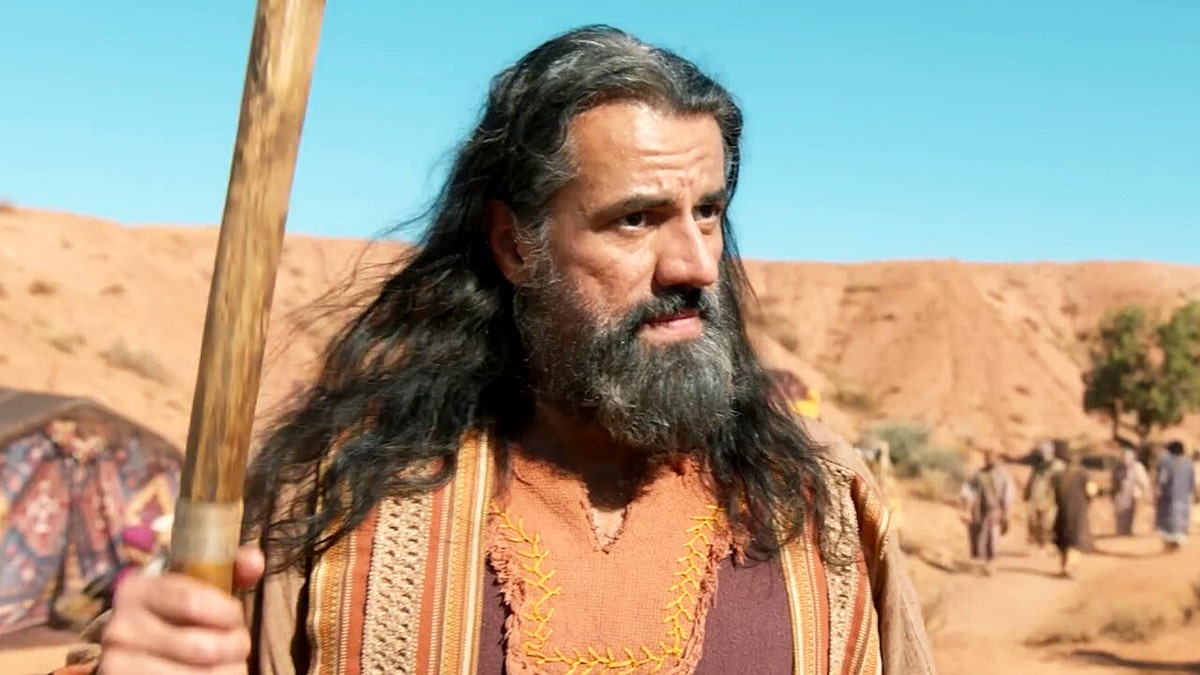
Wasim No'mani appears as Moses in "The Promised Land." ("The Promised Land" series via Youtube)
Making Moses relatable
"If you think about Moses, you're going to probably think about Charlton Heston," Hudson said, describing the proud protagonist from 1956's "The Ten Commandments" who is remembered for the epic moment when he split the Red Sea on screen.
In a traditional biblical epic, Moses is defined by his biggest moments. But Hudson says "The Promised Land" is more interested in his day-to-day frustrations, awkward leadership moments and what it might actually feel like to guide the Israelites through the desert.
That's where the mockumentary format comes in. "Talking head" style confessional scenes let characters plainly state what they’re thinking, allowing audiences to connect with legendary figures on a human level.
'DOGMA' DIRECTOR SAYS CATHOLIC FAITH FUELED FIRST FILM, BUT DISBELIEF WILL SHAPE SEQUEL
"It's just a really nice opportunity to get an inside look at what leadership looked like in that time period, especially with Moses' story," Hudson said. "Because he was not a natural leader, and the people who helped him lead were his brother and sister, who also weren't natural leaders."
That human-first approach, he argues, can also broaden the audience — working for viewers who grew up with the story, those who only know the basics and people coming in with no religious background at all.
Humor with heart
Hudson told Fox News Digital he didn’t want the series to play like a string of sketches built around biblical punchlines. Instead, he aimed for a tone that could shift naturally between laughs and sincerity.
"That felt like it was necessary because of the story that we’re telling," Hudson said, arguing it would be "doing the story a disservice if it was only funny."
"When they’re hurting, we’ll hurt with them. And then when they’re laughing, we’re going to laugh, too."
Hudson pointed to the way modern comedy has evolved, with audiences increasingly responding to series that allow room for emotional honesty alongside humor.
"Comedy is usually a reflection of life," he said. "I think we like to see all of the life, not just the jokes."
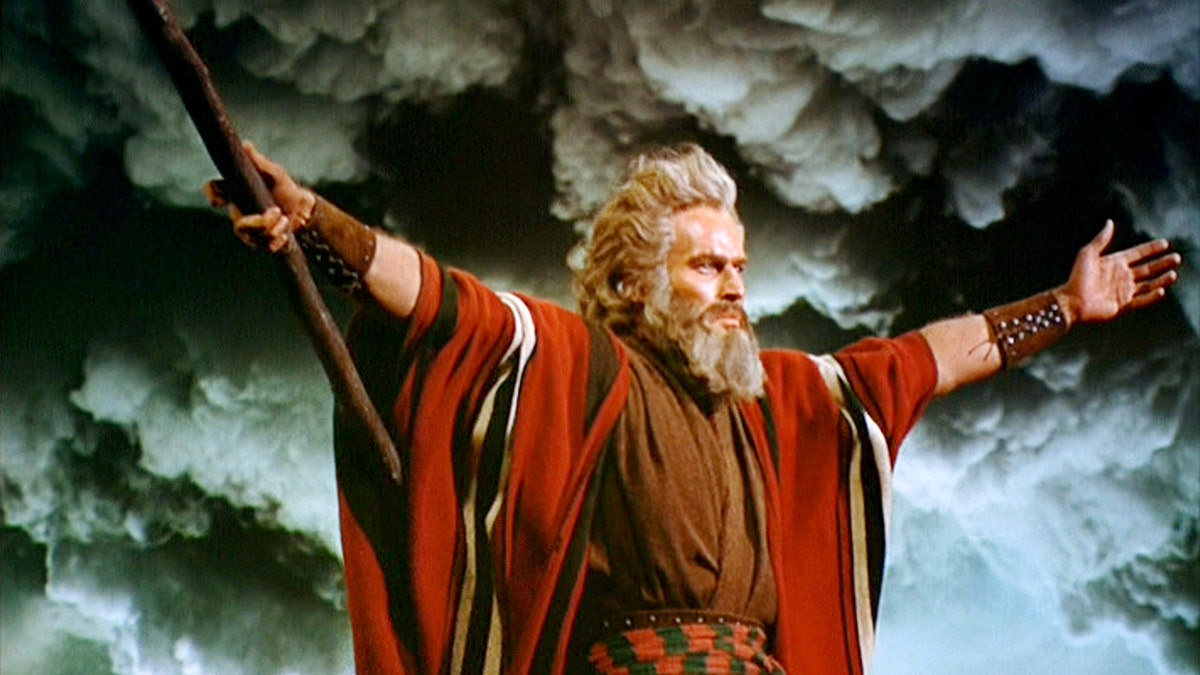
Charlton Heston appears as Moses during the parting of the Red Sea in the epic film "The Ten Commandments," directed by Cecil B. DeMille and released on Oct. 5, 1956. DeMille’s Moses highlights the figure’s epic moments, while Hudson’s Moses in "The Promised Land" is portrayed as more down-to-earth, facing familiar doubts. (CBS via Getty Images)
Sacred source material
Hudson emphasized his respect for the source material that is precious to so many.
"I want to make sure that we keep it sacred."
'MAN VS WILD' STAR BEAR GRYLLS SAYS WRITING ABOUT JESUS WAS HARDER THAN CLIMBING MOUNT EVEREST
For him, the "line" is clear. "Jokes about people are fair game... people are naturally going to fail, going to make mistakes. People are funny, and the same as we've always been, basically," he said, adding that the comedy is rooted in human nature, not cynicism about belief.
"The joke is never… that God’s not real."
Instead, he noted that he aimed to depict God as a real and meaningful presence for the characters, with the humorous elements coming from how imperfect people react under pressure.
Humanizing Bible heroes
Hudson’s approach leans into the gap between calling and confidence. He described Moses as someone who doesn’t have it all together; he is a leader trying to rise to the moment rather than arriving fully formed.
"I think Moses definitely dealt with impostor syndrome. I mean, we even see it in the Bible. When God calls him, Moses is like, 'Don't take me, take my brother, Aaron,'" Hudson said.
He pointed out that even though Moses didn't feel equipped to lead the Hebrews, it becomes evident why he was chosen, "because clearly he's dedicating himself to this, and he's gonna do his best."
"It's not about being the best, it's about doing your best. And I think that was very much what Moses did in scriptures... We're really trying to steer into the fact that this has not come naturally to Moses. It is not easy for Moses — which is very funny."
DISNEY STAR DAVID HENRIE SAYS HOLLYWOOD GOING THROUGH 'NEW RENAISSANCE' WITH FAITH-FRIENDLY CONTENT
Hudson said he hopes that by humanizing these characters, the series illustrates the idea that God does not work through perfect people.
"He picked Moses. He picked Miriam. He picked Aaron, and he used them, even though they weren't perfect... So the hope with making Moses seem like someone who has faults — someone who's going to make mistakes, someone who is going to doubt himself — is to try to illustrate that God used regular human people then, and he still does now. He used them. He can use us."
Meeting audiences where they are
One surprise, Hudson remarked, was how well that message is resonating with new audiences.
"The Promised Land" has found traction on YouTube, where Hudson said most of his viewers are between 18 and 25 years old — bucking the trend of biblical content being targeted primarily at families.
"Our show is family friendly, but it's really targeted at... millennial and Gen Z audiences. And it's been really cool to see them responding to our show."
Hudson said the mockumentary approach can lower the barrier to entry for people who might be hesitant to engage with what they view as religious content.
"Telling someone, 'Hey, go read Exodus,' sounds like a more daunting task than saying, 'Hey, watch a TV show about Moses, that is also extremely true to the scriptures.'"
He sees comedy as a "lower pressure environment" that can make room for curiosity, disagreement and sincerity at the same time.
"Right now, comedy is a good space for truth, where people can share authenticity."
Worship is punk rock
Despite production obstacles such as noisy off-road vehicles, rogue baby bats and endless sand, the response to "The Promised Land" has energized Hudson and his team to keep creating. The series has been greenlit for a second season, showing there’s an audience hungry for Hudson’s brand of irreverent reverence.
CLICK HERE TO DOWNLOAD THE FOX NEWS APP
In a media landscape full of gritty reboots and cynical satire, Hudson finds something surprisingly rebellious about a show that is both genuinely funny and unapologetically faithful.
"I think it’s kind of punk rock in a way for just being a funny, faith-based show about Moses," he said. "It sounds impossible, but it’s a lot of fun."
Max Bacall is an Associate Editor for the Flash/Media/Culture team at Fox News Digital.