
NEWYou can now listen to Fox News articles!
An iceberg that broke off from Antarctica 40 years ago and is one of the largest ever tracked by scientists is on the verge of "complete disintegration," NASA said on Thursday.
A-23A was twice the size of Rhode Island when it first detached from Antarctica in 1986 — during a year when "Ronald Reagan was President of the United States, and the movie ‘Top Gun’ was setting box office records," the space agency noted.
It is now floating in the South Atlantic between the eastern tip of South America and South Georgia island.
The iceberg was just over 1,500 square miles in 1986, and the U.S. National Ice Center estimates it has dwindled to 456 square miles early this year, after several sizable pieces broke off last summer as it moved to a warmer climate.
SCIENTISTS DETECT MYSTERIOUS RADIO WAVES COMING FROM BENEATH ANTARCTICA'S ICE

A photo of A-23A taken from the International Space Station on Dec. 27, 2025. (NASA)
Despite its dwindling size, the berg remains one of the largest in the world, larger than New York City.
A-23A, which is turning blue as it’s soaked with meltwater, was captured by a NASA satellite the day after Christmas.
A NASA scientist aboard the International Space Station took a close-up photo of the berg a day later that showed an "even more extensive melt pool."
The blue and white stripes visible on the iceberg are likely related to striations that occurred hundreds of years ago when it was part of a glacier dragging across Antarctic bedrock.
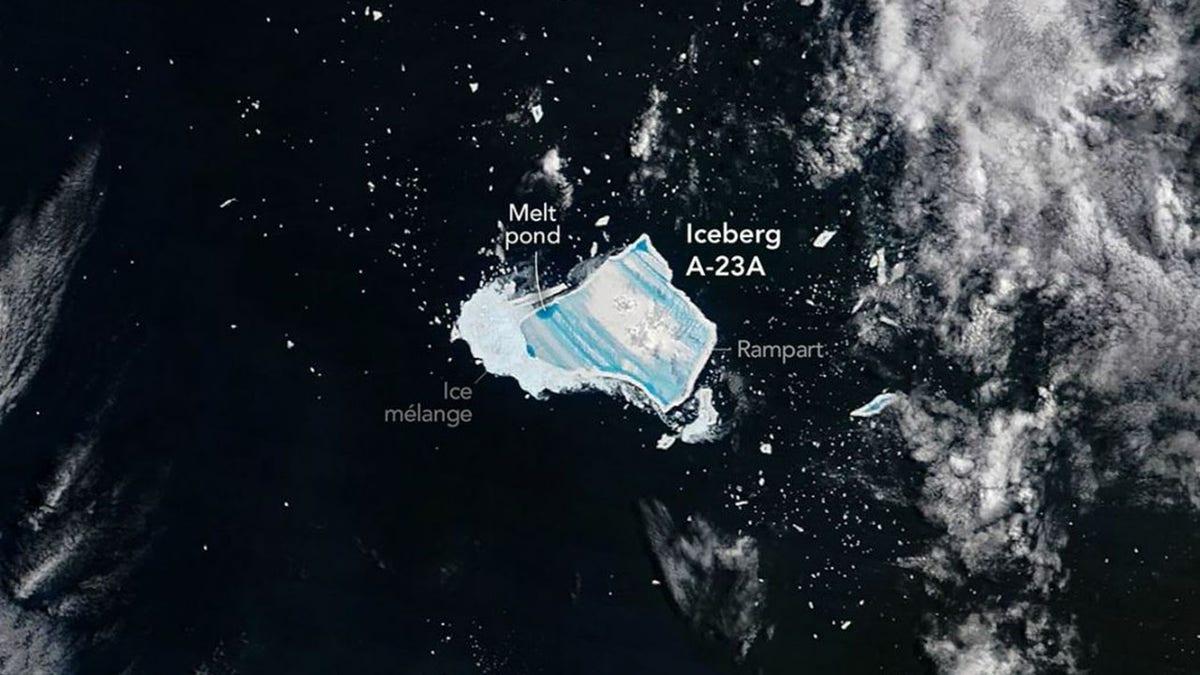
A satellite photo taken of A-23A on Dec. 26, 2025. (NASA)
"It's impressive that these striations still show up after so much time has passed, massive amounts of snow have fallen, and a great deal of melting has occurred from below," retired University of Maryland Baltimore County scientist Chris Shuman told NASA.
The iceberg also appears to have "sprung a leak," with the weight of the water pooling a the top creating enough pressure at the edges for a "blowout," NASA said.
The iceberg could be between days and weeks from disintegration, scientists say.
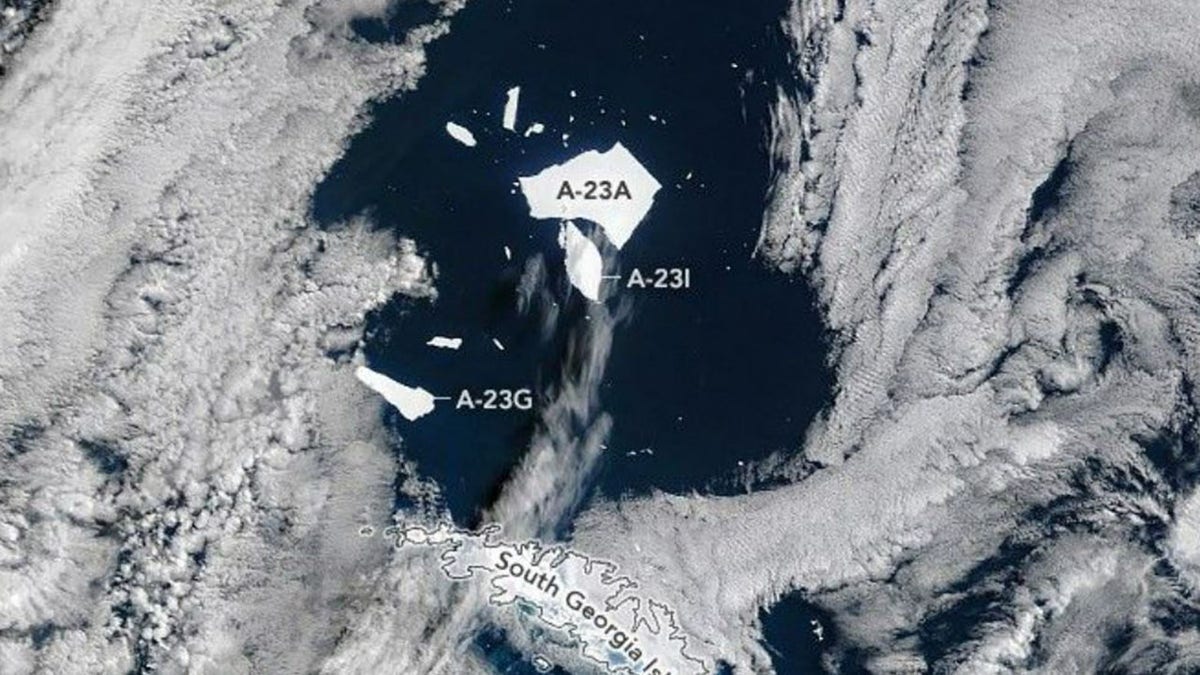
The iceberg north of South Georgia Island in September 2025. (NASA)
"I certainly don't expect A-23A to last through the austral summer," Shuman said, referring to summer in the Southern Hemisphere, which lasts from December to February.
"Even by Antarctic standards, A-23A has had a long, winding journey full of unexpected chapters that have improved scientists' understanding of the 'megabergs' occasionally released into the Southern Ocean," NASA said.
CLICK HERE TO DOWNLOAD THE FOX NEWS APP
The iceberg sat in the shallow water of the Weddell Sea in teh Southern Ocean for more than 30 years, before breaking free in 2020 and into an ocean whirlpool for several months.
It then moved north, nearly colliding with South Georgia Island, east of the Falklands, before heading out into the open ocean where it rapidly began to break apart last year.