NEWYou can now listen to Fox News articles!
As AI becomes more common, bad actors are working to take advantage of the technology in order to work smarter, not harder, when it comes to stealing data and money. Companies like OpenAI, however, are now deploying the same tools to fight back, launching efforts aimed at stopping scammers before they reach their targets.
"This is very much an evolution rather than a revolution in scammer activity," OpenAI’s lead scams investigator Jack Stubbs told Fox News Digital. "The scams themselves are very much the same as they've always been."
Scammers are still impersonating celebrities and making phony investment opportunities to lure victims with promises of funds or the use of emotional ploys, according to Stubbs. Now, AI is helping bad actors work faster, cheaper and more efficiently.
"The most common misuse of our models that we see by scammers is basic translation work," Stubbs said. "They're getting messages from victims, they're translating it into a different language and then getting help from the AI in kind of crafting their next response."
WHITE HOUSE PUSHES CONGRESS TO BAN STATE AI LAWS IN NEW FEDERAL FRAMEWORK

OpenAI joins the Global Anti-Scam Alliance as bad actors use AI to scam victims out of money and data. (Halfpoint/iStock/Getty Images)
While AI can clean up the grammar and spelling errors typically associated with scam emails or text messages, it still leaves hints that can help would-be victims spot a scam more easily. This, according to Stubbs, is because scammers still operate in a similar pattern even while using AI.
Stubbs broke down scams into three phases: "the ping," "the zing" and "the sting."
The first phase, the ping, is the cold open, often an email or online message that opens communication between the scammer and the target.
Next comes the zing. This is where the ask or the plea comes into play. In the "zing" phase, a bad actor could propose an investment opportunity that they say will multiply the victim's investment, or they will give an emotional plea, saying that they need it for whatever reason.
Finally comes the "sting." This is where the scammer extracts data, money or both from the target.
There is no phase where it's easiest to catch scammers, according to Stubbs. However, he emphasized the importance of trying to catch them in the initial "ping" phase.
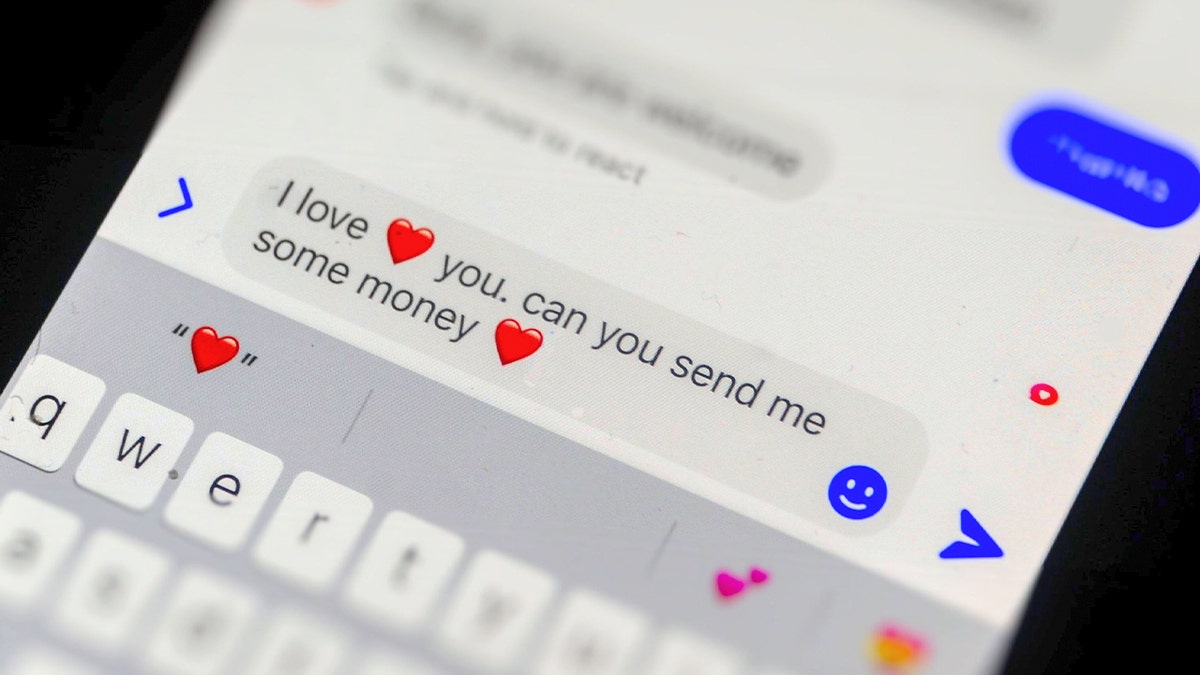
Scammers are using AI to improve on old tactics, such as romance fraud. (Frank Brennan/iStock/Getty Images)
FAKE CHATGPT APPS ARE HIJACKING YOUR PHONE WITHOUT YOU KNOWING
"If we can intercept this type of criminal activity when it first makes contact with people, maybe when someone gets a weird, kind of suspicious text message, they encounter a website online that looks strange, that's how we can reduce harm the most and help keep people safe," Stubbs said.
In its effort to fight the misuse of AI for scams, OpenAI recently joined the Global Anti-Scam Alliance (GASA), an international organization that works to bring stakeholders from the public and private sectors together to fight scams. The group's Global State of Scams Report 2025 estimated that $442 billion was lost to scams across 42 countries surveyed, with 23% of respondents reporting they had lost money in the past year.
OpenAI and GASA recently launched Scam.org, an AI-powered platform that offers support to scam victims in over 50 languages. It also provides educational materials on detecting, preventing and reporting scams.
"The really cool part is they can also report indicators or bits of information associated with the scam back to the Global Anti-Scam Alliance, so they can share that with industry partners, maybe law enforcement, and we can all work together to help keep people safe," Stubbs said.

When personal and billing information is exposed, the risk extends beyond one company to everyday customers. (Pixelfit/Getty Images)
The launch of Scam.org came days ahead of the Global Fraud Summit in Vienna, Austria, where the Industry Accord Against Online Scams and Fraud was signed by several major actors, including OpenAI. Stubbs said that one of the biggest technical wins he thinks can come from the accord is increased information sharing.
"This is something that in the tech industry we've been working on for years, and we're increasingly talking to folks in government, law enforcement, so that we can all come together, share the information we have about who these criminal actors are and how they're operating," Stubbs said.
CLICK HERE TO DOWNLOAD THE FOX NEWS APP
Even as scammers adapt and use new technology to their advantage, Stubbs said simple awareness, common sense and verification can still stop many attacks. He pointed out that if these scams were conducted in real life, such as a stranger approaching someone and claiming to have an investment opportunity, most people would know something was not right.
"The best defense that we all have to keep ourselves safe from scams is trying to keep the mental wherewithal to stop, to think and to check with a kind of trusted second source. And that might be a relative, it could be a colleague, it could be a really close friend, and in the case of AI technologies, it can be tools like ChatGPT, like Scam.org," Stubbs said.
Rachel Wolf is a media and culture reporter for Fox News Digital.